

Centro Universitario Teatrale di Parma (CUT)
Il Centro Universitario Teatrale di Parma (CUT-Parma) was a student theatre group active between 1954 and 1971 in Parma, a middle-sized town in northern Italy. Since 2016 is alive again in a completely renewed contest.
-
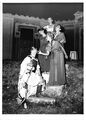 Miles Gloriosus, directed by Gianfranco Ferri (1956), Archivio Storico della Fondazione Teatro Due, Parma.
 -
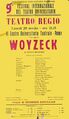 Poster of Woyzeck, directed by Giorgio Pressburger (pseudonym of Giorgio Longaro), 1960, Archivio Storico della Fondazione Teatro Due, Parma.


History
The University Theatre Centre of Parma (CUT-Parma) was founded, like many other University Theatres in republican Italy, in the wake of the moral, cultural and artistic reconstruction that followed the Second World War, after the fascist epoch. At that time, the University of Parma did not have a Faculty of Arts or Education, and the foundation of a student theatre company was due to the fervent planning of the AUP, the Parma University Association, which in 1953 promoted the Festival Internazionale del Teatro Universitario (FITU), an International University Theatre Festival that was to be very successful. FITU took place annually between 1953 and 1975, with only two years of interruption in 1971 and 1972). The AUP immediately felt the need for a local university theatre to accompany the Festival, and launched it by involving both university students and some young actors from the city's amateur companies.
In the 1950s, CUT-Parma devoted itself to a classical repertoire (Plautus and Terence), with an experimental approach, to distinguish itself from amateur companies. The company received State subsidies, as at that time University Theatres played a representative role and were important in terms of cultural diplomacy. CUT-Parma toured abroad, within the network of University Theatre Festivals, and also performed for Italian emigrant communities through contacts with embassies.
In the 1960s, under the guidance of Serbian director Bogdan Jerkovic, who steered the repertoire towards a rediscovery of avant-garde theatre and the theatre of the absurd, CUT's artistic profile grew rapidly, making it one of the best-known university theatre groups in Europe. CUT Parma promptly joined the UITU, the International Union of University Theatre[1], and from 1965 onwards, it supported the AUP in the governance of the FITU.
In the effervescent wave of the late Sixties, when the student movement took centre stage and theatrical practices expanded in Italian society, the second generation of CUT-Parma protagonists, led by Gigi Dall'Aglio[2], created a professional ensemble, La Compagnia del Collettivo[3], later Teatro Stabile d'Innovazione, now Teatro Due, a theatre of national importance: thus CUT-Parma contributed substantially to the current Italian theatrical landscape.
In Parma, the karstic tradition of university theatre is not dead, and in the decades that followed, new waves of students have revived it in different historical phases. Today, in 2025, the CUT is thriving and in good health, having its seat at the new CAPAS spaces, and it carries out many experimental theatre and social interaction projects[4].
Members
Flavio Ambrosini, Laura Benassi, Gigi Dall’Aglio, Paolo Bocelli, Sergio Reggi, Roberto Abbati, were among the most active amateur promotors, participants and actors who animated CUT-Parma between 1954 and 1971. Their biographies and their memories are accessible trough the web-platform created for the project of oral history La memoria dei teatri universitari in Italia, https://patrimoniorale.ormete.net/progetto/la-memoria-dei-teatri-universitari-in-italia-prin-2015-per-formare-il-sociale/, at the voice “PARMA” curated by Roberta Gandolfi and Gaia Chernetich.
Performances
For a complete list of performances of CUT-Parma, please refer to: Margherita Becchetti, Il teatro del conflitto. La Compagnia del Collettivo nella stagione dei movimenti, 1968-1976, Odradeck, 2003, Teatrografia CUT, Appendice 2: “Locandine degli allestimenti del CUT e della Compagnia del Collettivo”, pp.149-154
References
- ↑ Intervista a Binnerts Paul e Engelander Rudy, di Gandolfi Roberta, Govi Cavani Giulia e Zaccheo Tommaso, tramite GoogleMeet, il 08/04/2025, Progetto “Il teatro dei festival tra locale e globale (PRIN 2022)”, Collezione Ormete (ORMT-13p), consultata in URL: https://www.patri/moniorale.ormete.net/interview/intervista-a-rusconi-alberto, (08/09/2025).
- ↑ Roberta Gandolfi, Nozze d’oro con il teatro: Gigi Dall’aglio e una diversa memoria della scena italiana, «Culture Teatrali» 30, 2021, pp. 159-165.
- ↑ Margherita Becchetti, Il teatro del conflitto. La Compagnia del Collettivo nella stagione dei movimenti, 1968-1976, Odradeck, 2003.
- ↑ https://www.capas.unipr.it/cut-centro-universitario-teatrale/